Rethinking Nearshoring: The Case for Asia-Pacific That the Latin America Narrative Ignores

Conventional wisdom moves fast in supply chain circles, and few ideas have achieved consensus status as quickly as nearshoring to Latin America. The argument has an appealing simplicity: bring manufacturing closer to the United States, reduce exposure to transoceanic logistics risk, benefit from favorable trade agreements, and sidestep the geopolitical complications of Asia-Pacific. It is a clean narrative. It is also, for a significant portion of US companies, the wrong one.
This is not an argument against Latin America as a supply chain destination. Mexico's manufacturing sector, particularly in automotive and electronics, has genuine strengths that justify serious consideration. But the nearshoring narrative has hardened into an assumption that proximity automatically equals resilience, and that assumption deserves direct challenge.
For US companies conducting honest total-cost-of-ownership analysis—one that accounts for infrastructure reliability, skilled labor availability, supplier ecosystem depth, and the actual (as opposed to theoretical) cost of logistics—certain Asia-Pacific economies continue to offer supply chain propositions that Latin American alternatives cannot match. The companies recognizing this are making better capital allocation decisions. Those that have accepted the nearshoring narrative uncritically are, in a number of cases, discovering its limitations at considerable expense.
The Infrastructure Gap That Proximity Cannot Close
Geographic proximity to the United States is a genuine advantage in supply chain design—but only when the infrastructure connecting origin to destination is reliable. And infrastructure reliability is where the nearshoring narrative most frequently overstates its case.
Mexico's manufacturing infrastructure, while strong in established industrial corridors, faces well-documented constraints: inconsistent energy supply, regional security challenges that affect logistics routes, and port congestion that periodically undermines the transit time advantages that proximity is supposed to provide. These are not hypothetical risks. They are operational realities that US supply chain managers with Mexican sourcing experience encounter with regularity.
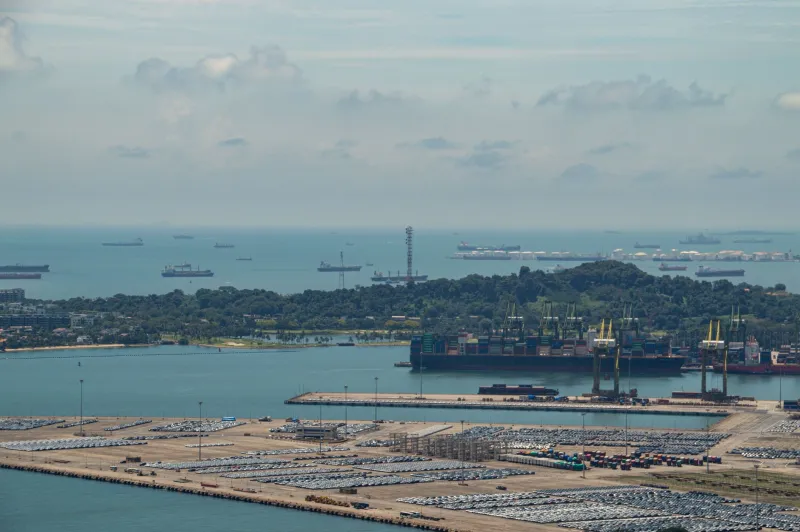
Contrast this with the infrastructure profiles of Malaysia, Taiwan, or South Korea. These economies have invested at scale in port capacity, logistics technology, industrial power reliability, and transportation connectivity. Shipping times from Southeast Asian ports to US West Coast destinations have lengthened in some scenarios relative to pre-pandemic norms, but the reliability and predictability of those shipments—the factor that actually drives supply chain planning—compares favorably with alternatives that appear geographically closer on a map.
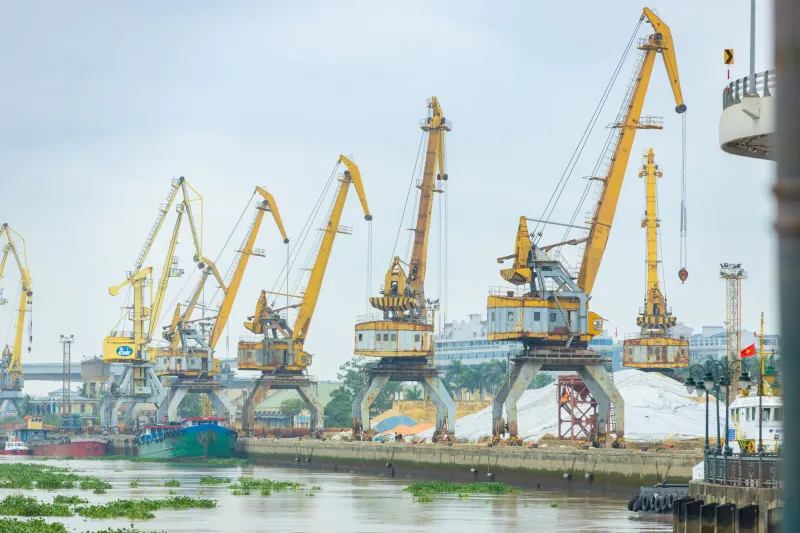
Vietnam's ongoing port and road infrastructure investment, concentrated in the industrial north and the central coast, is narrowing the gap further. The country's logistics performance index rankings have improved materially over the past decade, reflecting genuine capability development rather than statistical noise.
Skilled Labor: The Dimension Nearshoring Advocates Underweight
The skilled labor argument for Latin American nearshoring is typically presented in terms of cost: wages in Mexico, Colombia, or Costa Rica are competitive, and the cultural proximity to the United States facilitates management. These points have merit. But the analysis frequently stops before reaching the question that matters most for advanced manufacturing: depth.
Taiwan's semiconductor ecosystem, South Korea's precision manufacturing base, and Japan's deep reservoir of engineering and process management expertise represent concentrations of industrial skill that took decades to accumulate and cannot be replicated through wage arbitrage or geographic repositioning. For US companies manufacturing products that require complex supplier ecosystems, precision tolerances, or advanced materials expertise, the relevant question is not where labor is cheapest or most proximate—it is where the necessary skills actually exist in sufficient depth to support production at scale.
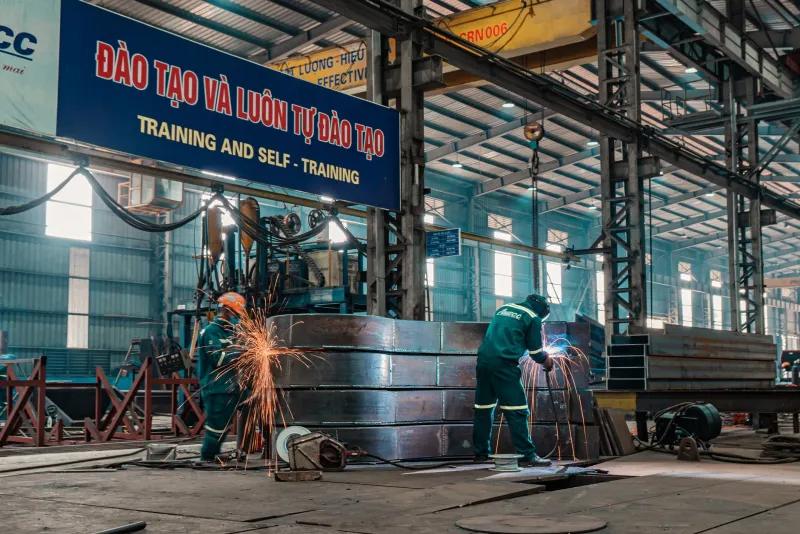
Vietnam has emerged as a particularly compelling case study in this context. The country's investment in technical and vocational education, combined with a decade of manufacturing sophistication driven by Samsung, Intel, and other major electronics producers, has created a workforce with capabilities that extend well beyond the assembly operations with which Vietnam was historically associated. US companies sourcing electronics, precision components, and industrial goods from Vietnamese suppliers are accessing a talent base that simply has no equivalent at comparable cost levels in Latin America.
Geopolitical Risk: A More Nuanced Picture Than the Narrative Allows
The geopolitical argument for nearshoring rests on the premise that Asia-Pacific carries elevated risk due to US-China tensions, Taiwan Strait uncertainty, and the broader complexity of the region's security architecture. These are legitimate considerations that belong in any serious supply chain risk assessment.
What the argument tends to omit is an equally serious examination of Latin American political risk. Mexico has experienced significant policy volatility affecting foreign investment, including energy sector reversals, judicial reform controversies, and evolving interpretations of the USMCA framework. Several other Latin American economies that are frequently cited as nearshoring destinations—Colombia, Brazil, Peru—have navigated meaningful political instability in recent years that has had direct operational consequences for foreign investors.
The Asia-Pacific geopolitical risk picture, examined carefully, is also more differentiated than the headline narrative suggests. US-China tensions are real and consequential, but they are also a primary driver of investment toward non-China Asia-Pacific destinations—Vietnam, Malaysia, Thailand, Indonesia, India—that are actively positioning themselves as beneficiaries of supply chain diversification. These countries' relationships with the United States are, in most cases, strengthening rather than deteriorating, and their governments are competing aggressively for the manufacturing investment that supply chain restructuring is generating.
Total Cost of Ownership: Running the Actual Numbers
The most important analytical corrective to the nearshoring narrative is a rigorous total-cost-of-ownership model—one that moves beyond wage rates and transit times to incorporate the full range of variables that determine delivered cost.
When US companies run these models honestly, several findings recur. Logistics costs from Southeast Asia to US markets, while higher on a per-shipment basis than Mexico-to-US alternatives, are frequently offset by lower unit production costs and higher quality consistency. Inventory carrying costs, which are directly affected by supply chain reliability rather than proximity, often favor Asia-Pacific sources whose shipment predictability enables tighter inventory management. And the total cost of quality failures—rework, returns, customer service burden—tends to favor suppliers with longer track records in demanding manufacturing environments.
None of this is an argument for ignoring Latin America. It is an argument for doing the analysis rather than accepting the narrative. For many US companies, particularly those in advanced manufacturing, electronics, and industrial goods, that analysis will continue to point toward Asia-Pacific as the strategically superior choice—not because nearshoring is wrong in principle, but because proximity, by itself, has never been a supply chain strategy.