Two Markets, One Strategy: How US Companies Are Winning With India-Vietnam Supply Chain Pairing
The Single-Country Model Is Showing Its Age
For the better part of two decades, American procurement teams operated on a straightforward principle: identify the lowest-cost manufacturing hub, consolidate volume there, and optimize relentlessly. China served that role admirably. Then came tariff escalations, pandemic-era port closures, and a geopolitical environment that turned concentration risk from a theoretical concern into a balance-sheet reality.
The response from many US companies was predictable — a pivot toward Southeast Asia, with Vietnam absorbing a disproportionate share of redirected manufacturing investment. Vietnam remains a compelling destination, and for good reason. But the country is not without constraints. Infrastructure bottlenecks at key industrial zones, a tightening skilled-labor market, and growing scrutiny of transshipment practices have introduced friction that early movers did not anticipate.
A more sophisticated cohort of American supply chain executives is now pursuing a different answer — one that treats India and Vietnam not as alternatives to each other, but as complementary nodes in a deliberately constructed dual-market architecture.
Why India and Vietnam Complement Rather Than Compete
At first glance, India and Vietnam appear to compete for the same pool of US manufacturing investment. Both offer lower labor costs than China. Both have signed or are pursuing preferential trade agreements. Both have governments actively courting foreign direct investment with incentive packages and streamlined approval processes.
The strategic insight, however, lies in recognizing where each country's advantages are genuinely differentiated rather than duplicated.
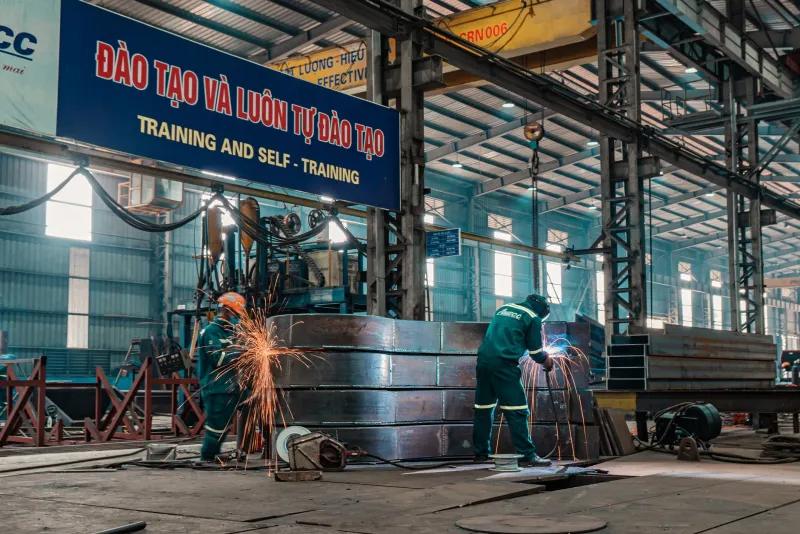
Vietnam excels in high-precision, export-oriented manufacturing that benefits from its well-established industrial park ecosystem, proximity to Chinese component suppliers, and a workforce with deep experience in electronics assembly and apparel production. Its northern provinces, particularly around Hanoi and Hai Phong, have developed into some of the most efficient electronics manufacturing clusters in the Asia-Pacific region.
India's strengths are distributed differently. Its pharmaceutical and chemical manufacturing sector operates at a scale and regulatory maturity that Vietnam's industry cannot yet match. India supplies roughly 40 percent of generic drugs consumed in the United States, and its formulation expertise spans active pharmaceutical ingredients through finished dosage forms. Beyond pharmaceuticals, India's domestic steel and engineering capacity, combined with a large English-speaking technical workforce, makes it well-suited for capital goods, industrial components, and increasingly, semiconductor-adjacent manufacturing.
For US companies, this means the two markets are often addressing different parts of the same supply chain rather than performing identical functions.
Electronics: Splitting the Stack
The electronics sector offers perhaps the clearest illustration of how the dual-market model works in practice. Several major American consumer electronics brands and their contract manufacturing partners have begun structuring production so that Vietnam handles final assembly and packaging — processes that benefit from the country's existing supplier ecosystem and export infrastructure — while India takes on printed circuit board fabrication, certain semiconductor packaging steps, and after-sales service operations.
This division is not arbitrary. Vietnam's northern manufacturing corridor has direct logistics links to component suppliers in southern China, making it efficient for assembly operations that still rely on Chinese-sourced parts. India, meanwhile, is building domestic capacity in upstream electronics manufacturing under its Production Linked Incentive scheme, with state-level programs in Tamil Nadu and Karnataka adding further momentum.
For a US company managing tariff exposure across both the China-origin and finished-goods categories, splitting the electronics stack between these two geographies can reduce blended duty costs while simultaneously shortening the list of single points of failure.
Pharmaceuticals: India Anchors, Vietnam Diversifies
In pharmaceuticals, the logic runs in a different direction. India is not the diversification play — it is the anchor. The country's established API manufacturing base, its familiarity with US FDA inspection regimes, and the depth of its formulation chemistry talent make it the primary production hub for most US generic drug sourcing strategies.
Vietnam enters the picture as a secondary manufacturing and packaging location, particularly for finished-dose products destined for Southeast Asian markets or as an overflow capacity buffer during periods of Indian production constraint. Several US pharmaceutical companies have quietly established Vietnamese packaging and secondary manufacturing operations precisely to reduce their dependence on any single regulatory jurisdiction.
This structure also provides a degree of insurance against the periodic FDA import alerts that have historically disrupted Indian pharmaceutical shipments to the US market. When an Indian facility faces regulatory action, a company with established Vietnamese secondary capacity has options that a purely India-dependent operation does not.
Textiles and Apparel: The Wage Gradient Advantage
In textiles and apparel, the India-Vietnam pairing exploits a wage gradient that has become increasingly significant as Vietnamese labor costs have risen in established manufacturing provinces. Vietnam's minimum wage in its highest-tier provinces now exceeds that of comparable Indian manufacturing states by a meaningful margin — a reversal of the situation that existed a decade ago.
US apparel brands have responded by using Vietnam for technically demanding, higher-value garment categories where its workforce experience commands a premium, while shifting commodity-grade production and raw fabric sourcing toward India's textile clusters in Gujarat, Tamil Nadu, and Maharashtra. India's vertically integrated cotton-to-garment supply chain — one of the most complete in the world — provides cost advantages in natural-fiber categories that Vietnam's more import-dependent industry cannot easily match.
Operationalizing the Dual-Market Approach
The commercial logic of the India-Vietnam pairing is relatively straightforward to articulate. Executing it is considerably more demanding. US companies that have made this model work consistently point to three operational requirements.
First, dedicated in-country representation in both markets is non-negotiable. Managing a dual-node supply chain through periodic visits and remote oversight introduces coordination gaps that erode the resilience benefits the structure is designed to provide. Companies that rely on a single regional manager based in Singapore — or worse, on their Chinese suppliers' recommendations — tend to underinvest in the relationship infrastructure that makes vendor management effective in both markets.
Second, the regulatory environments require genuine expertise rather than surface familiarity. India's GST structure, its evolving foreign direct investment rules, and its state-level incentive variations demand local legal and compliance counsel. Vietnam's rules of origin requirements — particularly relevant given US customs scrutiny of transshipment — require careful documentation management that cannot be delegated to a freight forwarder alone.
Third, the logistics architecture connecting the two nodes to US ports of entry needs deliberate design. The most efficient India-Vietnam supply chains are not simply two separate supply chains running in parallel — they are integrated systems with shared visibility platforms, coordinated inventory buffers, and pre-negotiated contingency routing that allows volume to shift between nodes when disruption occurs in one market.
The Resilience Dividend
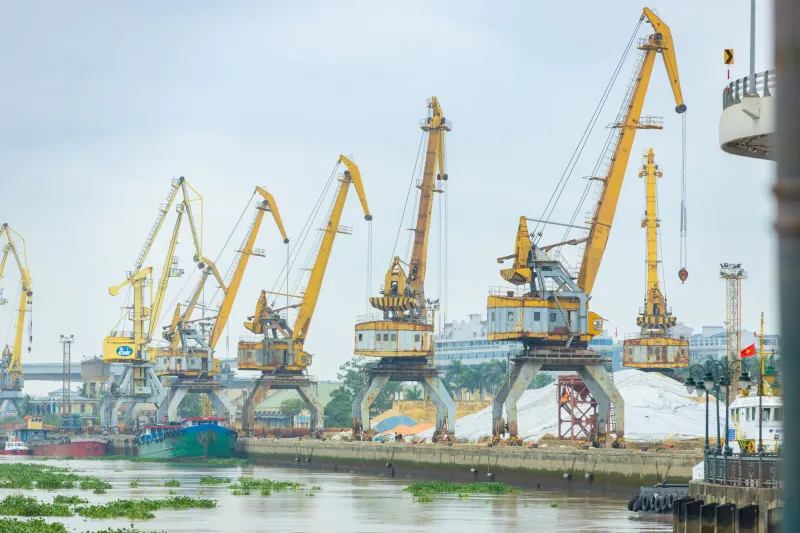
The companies that have made this investment are beginning to report what might be called a resilience dividend — not just reduced disruption frequency, but a measurable improvement in their ability to respond when disruption does occur. When Cyclone Michaung disrupted logistics in India's southeastern ports in late 2023, companies with active Vietnamese production capacity absorbed the impact with limited customer-facing consequences. When Vietnamese port congestion spiked during peak export season, those with Indian secondary capacity had alternatives already operational.
This is the commercial case for the India-Vietnam corridor in its clearest form. It is not primarily a cost story, though cost advantages exist. It is a risk-adjusted performance story — one that resonates with US procurement executives who have spent the past five years explaining supply disruptions to their boards.
For American companies still evaluating whether the operational complexity of a dual-market Asia-Pacific strategy is worth the investment, the evidence from early adopters suggests that the question is increasingly not whether to build this capability, but how quickly.