Beyond China: How Southeast Asia Became America's New Manufacturing Backbone
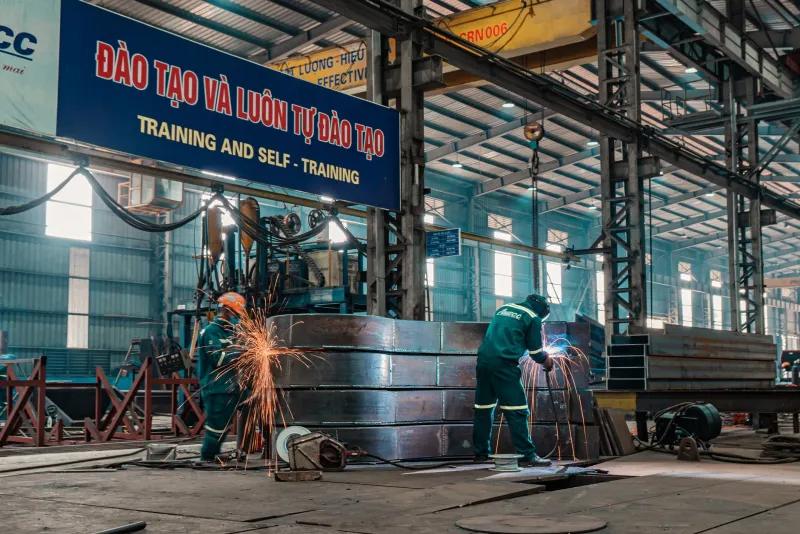
A quiet but seismic transformation is reshaping how American companies source and produce their goods. Driven by geopolitical friction, rising labor costs, and hard-learned lessons from pandemic-era disruptions, US manufacturers are establishing deep-rooted partnerships across Vietnam, Thailand, and Indonesia — and the results are proving more durable than many skeptics predicted.
For decades, China's manufacturing ecosystem was simply unmatched: deep supplier networks, sophisticated logistics infrastructure, and a workforce that scaled with remarkable efficiency. But the calculus has shifted. Tariff escalations beginning in 2018, compounded by COVID-19 supply shocks and an increasingly complex regulatory environment under export control regimes, have prompted American procurement executives to reassess their dependence on a single geographic hub.
At EB Asia, we have tracked this transition closely across dozens of industry verticals. What emerges is not a story of wholesale abandonment of China, but rather a strategic layering — what supply chain professionals now call "China Plus One" or, increasingly, "China Plus Many."
Vietnam: The First Mover's Advantage
No country has benefited more visibly from this reorientation than Vietnam. Foreign direct investment into Vietnamese manufacturing topped $36 billion in 2023, with American firms accounting for a growing share. The country's coastal geography, young workforce — median age just 31 — and membership in the Comprehensive and Progressive Agreement for Trans-Pacific Partnership (CPTPP) make it a structurally attractive alternative.
Consider the case of a mid-sized American electronics accessories company based in Austin, Texas. After absorbing two consecutive years of Section 301 tariff increases on Chinese-made components, the firm began qualifying suppliers in Ho Chi Minh City in late 2020. By 2022, roughly 60 percent of its cable and connector production had migrated north. The transition was not painless — initial quality control gaps required on-the-ground oversight for nearly eight months — but landed costs ultimately fell by an estimated 14 percent relative to equivalent Chinese production.
That figure is representative. Across the consumer electronics, footwear, and textile sectors, companies with established Vietnamese supply chains are reporting cost advantages of between 10 and 22 percent compared to comparable Chinese operations, once tariff exposure is factored in.
Thailand: The Precision Play
While Vietnam captures headlines, Thailand has quietly positioned itself as the preferred destination for higher-complexity manufacturing. The country's automotive supply chain — already among the most sophisticated in Southeast Asia — has attracted US tier-one and tier-two auto parts suppliers seeking to reduce exposure to Chinese-made components flagged under recent national security reviews.
Thailand's Board of Investment has aggressively courted foreign manufacturers with tax holidays of up to eight years, import duty exemptions on machinery, and streamlined work permit processes for foreign technical specialists. The Eastern Economic Corridor, a designated special economic zone spanning three eastern provinces, has become a focal point for advanced manufacturing investment in sectors including robotics, aerospace components, and medical devices.
Operational challenges remain real, however. Thailand's skilled labor pool, while capable, is smaller than Vietnam's, and wage inflation in the Bangkok metropolitan area has accelerated. Companies that have fared best are those that committed early to workforce development programs in partnership with local technical colleges — a strategy that requires patience but yields measurable retention advantages.
Indonesia: The Long Game
Indonesia represents perhaps the most complex, and most consequential, opportunity in the region. With a population exceeding 277 million and a domestic consumer market that is itself a powerful draw, the archipelago offers US manufacturers something Vietnam and Thailand cannot fully replicate: scale on both the production and consumption sides of the equation.
Nickel processing — critical to electric vehicle battery supply chains — has made Indonesia a strategic priority for American firms navigating the Inflation Reduction Act's domestic content requirements. Jakarta's decision to ban raw nickel exports in 2020 was initially controversial, but it has successfully catalyzed downstream processing investment, drawing in global manufacturers who might otherwise have bypassed the country.
The friction points are well documented. Indonesia's regulatory environment remains complex, with overlapping national and regional jurisdictions creating compliance burdens that catch unprepared foreign entrants off guard. Logistics infrastructure outside Java is inconsistent. And labor law, while recently reformed, still requires careful navigation.
Yet the companies that have invested in local expertise — whether through experienced in-country partners, dedicated government relations functions, or long-tenured local management — consistently report smoother operational trajectories than those that attempted to manage Indonesian operations remotely from regional hubs in Singapore or Hong Kong.
What the Data Tells Us
The aggregate picture is compelling. According to data compiled by the Asian Development Bank, Southeast Asia's share of global manufacturing exports rose from approximately 6.8 percent in 2017 to over 9.1 percent by 2023. American import data tells a parallel story: US goods imports from Vietnam alone grew by more than 180 percent over the same period.
Forecasts from multiple trade research institutions suggest this trajectory will continue. The Peterson Institute for International Economics projects that Southeast Asia's manufacturing FDI inflows will sustain double-digit annual growth through at least 2027, with American firms remaining among the most active investors.
Building a Durable Diversification Strategy
For US procurement and operations leaders evaluating this landscape, several principles have proven consistently valuable across the transitions EB Asia has observed and supported.
First, supplier qualification takes longer than projected. Companies that budget six months for the process routinely find it requires twelve to eighteen, particularly in sectors with stringent quality or regulatory requirements.
Second, on-the-ground presence is not optional in the early stages. Remote management of new supplier relationships in markets where relationship capital is foundational to business culture — and where real-time quality oversight is essential — consistently underperforms.
Third, geopolitical risk has not disappeared; it has diversified. Vietnam, Thailand, and Indonesia each carry their own political and regulatory risk profiles. A robust supply chain strategy accounts for this complexity rather than assuming that geographic diversification alone is sufficient.
The shift away from singular dependence on Chinese manufacturing is neither a fad nor a completed project. It is an ongoing structural adjustment — one that will define competitive positioning in American industry for the decade ahead. Those who treat it as a tactical cost exercise will find the results disappointing. Those who approach it as a strategic investment in regional intelligence and relationship-building will find Southeast Asia extraordinarily rewarding.