Fragile Links: The Underestimated Supply Chain Vulnerabilities Threatening US Companies in Asia-Pacific
For much of the past decade, the dominant conversation in US boardrooms about Asia-Pacific supply chain risk has centered on a single variable: China. Tariffs, trade tensions, and pandemic-era factory shutdowns trained American procurement teams to think about diversification almost exclusively in terms of moving production away from the mainland. That framing, while understandable, has produced a dangerous blind spot.
The supply chains that US companies have quietly built across Vietnam, Indonesia, the Philippines, and Bangladesh are not inherently more stable. They are simply less scrutinized. And in 2024, that lack of scrutiny is beginning to carry a measurable cost.
The Chokepoints Nobody Is Talking About
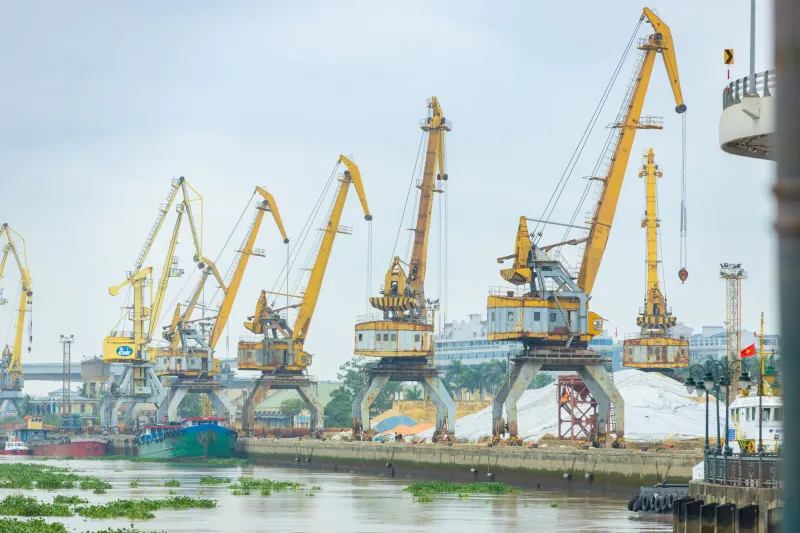
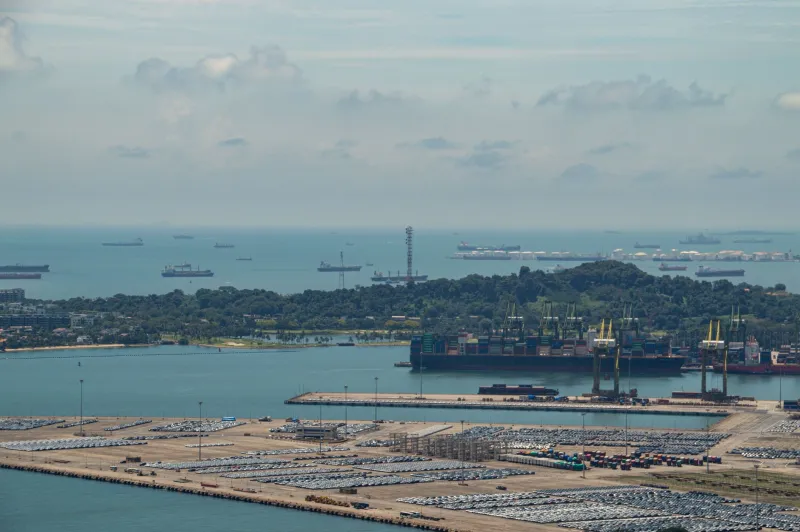
Start with Indonesia. The archipelago's geographic complexity — more than 17,000 islands spanning a maritime corridor that handles roughly 40 percent of global trade — creates logistical dependencies that are frequently underestimated by foreign buyers. The ports of Tanjung Priok in Jakarta and Tanjung Perak in Surabaya process the vast majority of the country's export volume, yet both facilities regularly operate above designed capacity. Vessel waiting times at Tanjung Priok have, during peak periods, exceeded those seen at major Chinese ports during the worst of the pandemic disruptions.
The problem is not simply infrastructure age. It is a combination of customs processing inefficiency, inter-agency coordination gaps, and an inland logistics network that struggles to feed goods to port at the pace modern export schedules demand. For US importers relying on Indonesian textiles, electronics components, or processed commodities, a port delay of four to seven days — not uncommon — can cascade into missed retail windows and broken fulfillment commitments.
The Philippines presents a different category of risk. Typhoon exposure is well understood, but what receives less attention is the country's regulatory inconsistency at the port level. Customs valuation disputes, shifting documentation requirements, and periodic crackdowns on specific commodity classifications have introduced unpredictable friction into what should be routine export processes. Companies that have invested in Philippine manufacturing partnerships often report that compliance costs and clearance delays are difficult to model in advance — a significant problem for businesses that operate on tight landed-cost assumptions.
Bangladesh: The Regulatory Fault Line
Bangladesh deserves particular attention. The country has emerged as the world's second-largest garment exporter, and US apparel brands have deepened their sourcing relationships there substantially over the past five years. Yet the regulatory environment has grown increasingly volatile.
Labor law amendments, evolving export incentive structures, and periodic shifts in the relationship between the government and the Bangladesh Garment Manufacturers and Exporters Association (BGMEA) have created an environment where the terms of doing business can change with limited notice. Add to this the country's exposure to climate-related disruption — flooding events that affect both factory operations and road infrastructure — and you have a sourcing market that carries far more embedded risk than its competitive pricing would suggest.
The Chittagong port, which handles the overwhelming majority of Bangladesh's export cargo, is a single point of failure for an entire national export economy. Congestion events there have historically taken weeks to resolve, with limited alternative routing options available to exporters.
Trade Route Vulnerabilities in a Shifting Geopolitical Landscape
Beyond individual markets, the trade routes connecting Asia-Pacific to US shores carry their own set of emerging vulnerabilities. The South China Sea remains a potential flashpoint, and while a full disruption of commercial shipping lanes is a tail-risk scenario, the insurance and rerouting costs associated with elevated tensions in the strait are already being felt by freight operators. US importers who have not modeled the landed-cost implications of alternative routing through the Lombok or Sunda Straits may find themselves unprepared if those scenarios materialize.
Separately, the ongoing realignment of shipping alliances among major ocean carriers — including recent consolidations and the dissolution of established consortium agreements — has reduced schedule reliability on several key trans-Pacific lanes. Spot rate volatility, which rattled procurement teams between 2021 and 2023, has moderated but has not disappeared as a structural feature of the market.
Building a Contingency Framework That Actually Works
The response to these vulnerabilities cannot be another round of geographic diversification alone. Moving production from one fragile node to another does not constitute resilience. What US companies sourcing across Asia-Pacific need is a layered contingency architecture built around three core principles.
Dual-sourcing with genuine activation readiness. Many companies maintain nominal backup suppliers but have never placed a meaningful order with them. A contingency supplier that has not fulfilled a real production run in the past twelve months is not a contingency — it is a contact in a database. Resilient sourcing strategy requires regular, deliberate volume allocation to secondary partners, even when primary sources are performing well.
Port and routing optionality built into contract structures. Sourcing agreements should include explicit provisions for alternative port of export and routing flexibility. This is a negotiating point that many US buyers leave on the table, assuming it is unnecessary until it is urgently needed.
Regulatory monitoring as a standing procurement function. Changes to export licensing requirements, customs classifications, and trade incentive programs across Asia-Pacific markets rarely arrive without precursor signals. Companies that treat regulatory intelligence as a reactive function — consulting lawyers only after a problem emerges — consistently absorb higher disruption costs than those that maintain ongoing visibility into the regulatory environments of their key sourcing markets.
The Strategic Imperative for 2025
The supply chain disruptions of the early 2020s were widely described as once-in-a-generation events. That characterization was almost certainly wrong. The structural conditions that produced those disruptions — concentrated logistics infrastructure, regulatory opacity, and climate exposure across key production geographies — remain largely intact. What has changed is the degree to which US companies can claim ignorance of these risks.
The Asia-Pacific sourcing landscape offers genuine competitive advantages for American businesses willing to engage with its complexity. But those advantages are only durable for companies that have invested in understanding where their supply chains are genuinely vulnerable — not just where they assumed the risks to be.
At EB Asia, our work with US clients across the region consistently surfaces the same finding: the companies that navigate disruption most effectively are not those with the most diversified supplier lists. They are those with the deepest operational intelligence about the markets they depend on.