The Other Demographic Dividend: B2B Procurement in Asia-Pacific's Aging Economies
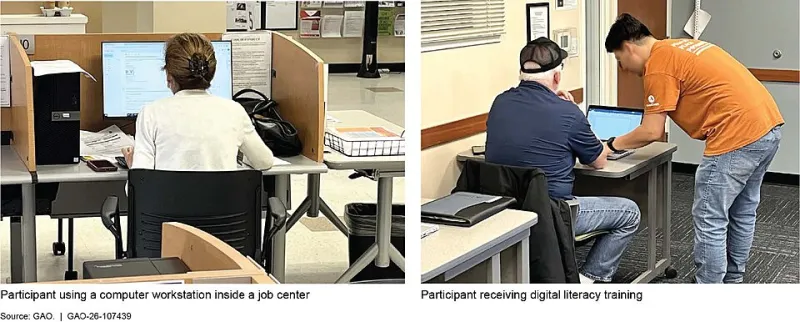
Photo: U.S. GAO, Public domain, via Wikimedia Commons
In most US boardrooms, Asia-Pacific's aging curve is filed under risk. Japan is invoked as a cautionary tale about debt and deflation; South Korea's entry into super-aged status is noted and set aside; Thailand's rapid fertility decline appears in country-risk appendices. That framing misses the more commercially useful observation: these are mature, well-funded buyers with statutory budgets and an acute labor problem, and they are purchasing now.
The relevant question for a US company is not how many people are turning 65. It is who signs the purchase order, what reimburseent or subsidy mechanism sits behind it, and how long the procurement cycle runs.
The buyers, not the demographics
Japan has roughly 29 percent of its population above 65 and continues to record low birth counts. South Korea crossed the 20 percent threshold in late 2024. Taiwan and Singapore are tracking similar trajectories, and Thailand is aging faster than any middle-income economy in the region. China's absolute numbers dwarf all of them.
What matters operationally is that the delivery of care in these markets runs through institutions rather than through the housing-and-services model that dominates American senior living. Long-term care insurance systems, national health programs, hospital groups, pharmacy networks, and municipal operators are the purchasing entities. They buy equipment, software, and services on annual and multi-year cycles, and they respond to documented labor savings.
Five categories where demand is already funded
Labor substitution in care settings and food service. Staffing ratios are the binding constraint in Japanese and Korean care facilities, and the same shortage is visible in institutional kitchens. Assistive lift equipment, monitoring systems that reduce night rounds, and automated meal assembly are procured against measurable reductions in staff hours.
Logistics and cold chain. Home-visit pharmacy, specimen transport, prepared meal distribution, and pharmaceutical last-mile all require temperature-controlled capacity that the region's distribution base has not fully built. Japan's tightened overtime limits for drivers sharpened the urgency.
Financial services for decumulation. Pension drawdown tooling, inheritance and digital-asset transfer, account consolidation, and elder fraud prevention are live budget lines at banks, brokers, and insurers in Japan, Korea, and Taiwan. Fraud prevention in particular commands spending because the losses are visible and the reputational cost is high.
Workplace and equipment redesign. Exoskeletons, ergonomic handling equipment, and assistive devices for care workers have moved from demonstration projects into procurement lists in Japan and Korea, often supported by subsidy programs that reduce the buyer's effective price.
Care-record interoperability and scheduling. Fragmented records and manual rostering are universal pain points. Vendors that integrate with existing systems rather than replacing them move through procurement faster.
Japan: deepest market, highest bar
The Japanese opportunity is large and the entry cost is real. Purchasing runs through trading houses, system integrators, and prefectural programs. Certification expectations — electrical safety marks, telecommunications conformity, industry standards — are non-negotiable, and the buyer will expect Japanese-language interfaces and on-site maintenance response. Long-term care reimbursement logic shapes what facilities can afford.
The positive side of that structure is durability. Once a product is specified into a facility operator's standard kit, it tends to stay specified for years, and service contracts renew.
Korea, Taiwan, and the smaller markets
South Korea combines fast procurement with formidable domestic competitors and demanding certification. Government digital health initiatives create openings, but buyers expect rapid integration and local support. Taiwan's procurement is hospital-centric and value-dense: small volumes, high specification, strong local ICT capability to partner with.
Thailand and Singapore should not be treated as one market. Thailand's demand is concentrated in private hospitals and family-funded care, with real price sensitivity and no reimbursement anchor to lean on. Singapore is the opposite: government-led programs, disciplined pilot-then-scale procurement, English-language comfort, and a low tolerance for vendors who cannot demonstrate measurable outcomes.
Why US entrants arrive late
The most common failure is importing the American model wholesale. US senior care is substantially a real-estate and services business; Asia-Pacific's mix is family care, institutional care, and insurance, with different decision-makers and different economics. A product built for a US assisted-living operator often has the wrong form factor, the wrong price point, and no path to reimbursement.
The second failure is underestimating service. These buyers are not purchasing software licenses at arm's length. They are purchasing uptime, spare parts, installation, and a local phone number that answers. Japanese and Korean incumbents win deals on service presence as often as on specifications.
The localization calculus
Product changes are usually modest and highly specific: voltage and safety compliance, language, integration with existing care records, and — increasingly — data residency commitments for health-adjacent information. Service model decisions are larger: direct presence versus a capable distributor, parts depots, and whether to price as capital equipment or as a subscription that fits an operating budget.
Commercially, the strongest entry pattern is co-development with a single operator, funded where possible through public subsidy programs, followed by reference selling to peers. Care operators in the region talk to each other, and a documented productivity result in one facility is worth more than a trade show booth.
What an investment lens adds
For US companies weighing capital allocation, three features distinguish this opportunity. Procurement cycles are long but sticky, producing recurring service revenue with low churn. Regulatory and certification requirements function as moats once cleared. And the exit market is real: Japanese trading houses, Korean conglomerates, and regional private equity have all acquired foreign care-technology assets to fill portfolio gaps.
The strategic error is framing this as an export of American senior-care expertise. The framing that wins budget approval in Tokyo or Taipei is narrower and more credible: fewer staff hours per resident, fewer medication errors, fewer unplanned hospital transfers. That is a procurement argument, and it travels.